Monitoring and Evaluation
Monitoring is a core component of delivering an effective plan. By collecting, analysing and evaluating data, we can track progress, measure impact and ensure that actions remain aligned with both short-term targets and our long-term vision. Data collection allows use to assess performance, refine approaches and ensure continuous improvement.
Each year the Forest Team collects and analyses a range of data, including,
- Woodland creation: area, location and species planted
- Community engagement: number of participants and volunteer hours
- Performance metrics: delivery against targets, financial updates and learning outcomes
This information is published in the North East Community Forest Annual Report, which highlights progress against targets, financial performance, case studies, learning outcomes and key insights to guide future planning.
Our data collection also contributes to national data sets, such as the Forestry Commission’s National Forest Inventory and Liverpool John Moors Universities Capital Analysis on the impact of England’s Community Forests and the Trees for Climate.
Relevant woodland creation data is shared with local partners, including Local Nature Recovery Strategies and Local Authorities, to support collaborative monitoring and alignment with the wider woodland, tree and environmental objectives.
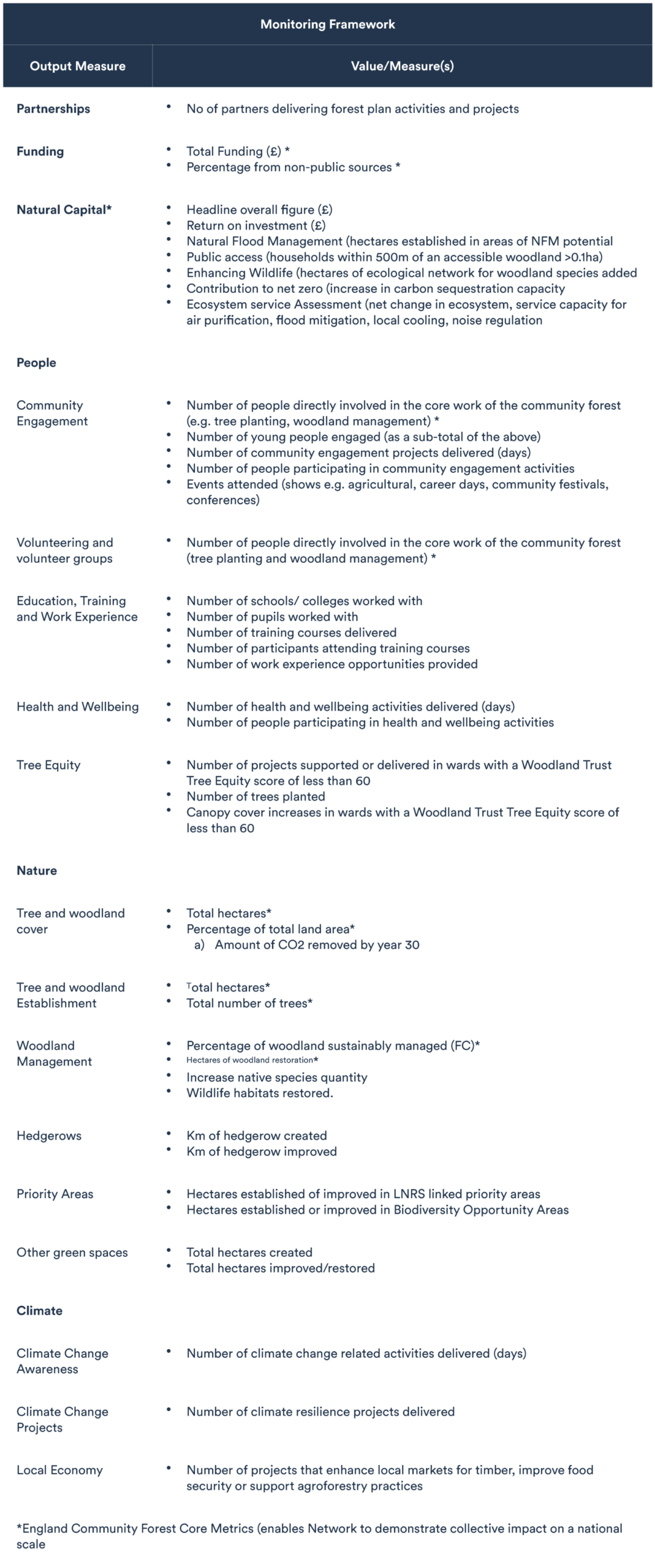
Monitoring underpins all aspects of the North East Community Forest’s work. It is essential for reporting impact, informing future strategy, supporting grant applications, funding appeals, approaches for business sponsorship and wider public engagement. Data collection focuses on activity directly delivered or funded by the North East Community Forest. Over time, the monitoring framework will be reviewed and expanded to include contributions from partners, local groups and other organisations operating in the community forest area.
Monitoring Framework